After deploying OpenChamber with Docker and Cloudflare Tunnel, the next practical step is connecting it to real source code. For most engineering teams, that means GitLab: private repositories, branches, merge requests, SSH keys, project conventions, and development servers that need to run safely inside a self-hosted AI coding workspace.
This guide finalizes the OpenChamber GitLab integration workflow. You will learn how to choose between SSH and HTTPS authentication, clone repositories into the correct mounted workspace, register projects in OpenChamber, manage branches, and run development servers without leaking credentials.
If you have not completed the infrastructure setup yet, start with How to Deploy OpenChamber with Docker and Cloudflare Tunnel. This article assumes OpenChamber is already running and reachable through a secure access layer.
How OpenChamber Works with GitLab Projects
OpenChamber does not need to be tightly coupled to the GitLab API to be useful. The most reliable model is simple: GitLab remains the source of truth, Git handles authentication and repository operations, and OpenChamber works with local directories that are already cloned into a mounted workspace.
The recommended workflow
- Prepare a persistent projects directory on the host.
- Authenticate GitLab access with SSH or HTTPS.
- Clone the repository into the mounted workspace.
- Register or open the local directory inside OpenChamber.
- Use branches, commits, and merge requests as usual.
This approach is portable across GitLab SaaS, self-managed GitLab, GitHub, Gitea, and almost any Git hosting service. It also makes backups and audits easier because repositories live in a known host directory instead of an opaque container layer.
Prerequisites Before Integrating GitLab
- A working OpenChamber deployment.
- A GitLab account with access to the target repositories.
- Docker volumes mapped for projects and configuration.
- Basic Git knowledge: clone, branch, commit, push, and pull.
- A plan for secrets, deploy keys, or personal access tokens.
For a stronger engineering process around AI coding, see Superpowers: AI Coding as a Real Engineering Process. OpenChamber gives you the environment; your team still needs clear standards for review, testing, and release.
SSH vs HTTPS Authentication for GitLab
GitLab supports both SSH keys and HTTPS access tokens. Both can work, but they behave differently in a persistent AI coding workspace.
SSH authentication: recommended for long-running workspaces
SSH is usually the best default because credentials are not embedded in clone URLs. You can create a dedicated key, scope it to the right user or deploy key, and rotate it when needed.
ssh-keygen -t ed25519 -C "openchamber@gitlab" -f ~/.ssh/openchamber_gitlab
cat ~/.ssh/openchamber_gitlab.pub
ssh -T [email protected]
HTTPS token authentication: useful but riskier
HTTPS tokens are convenient for quick setup, CI-like workflows, or environments where SSH is blocked. The risk is accidental exposure. Never paste tokens into shared documentation, logs, prompts, or committed files.
Preparing the OpenChamber Projects Directory
Repositories should live in a mounted directory that survives container recreation. A clean convention is:
/opt/openchamber/projects/
  backend-api/
  frontend-app/
  infra-tools/
Make sure the container can read and write this location, but avoid mounting the entire host home directory. Narrow mounts are safer and easier to audit.
Clone a GitLab repository securely
cd /opt/openchamber/projects
git clone [email protected]:your-group/your-project.git
cd your-project
git status
If you use a custom SSH key, configure it explicitly in ~/.ssh/config.
Registering the Repository in OpenChamber
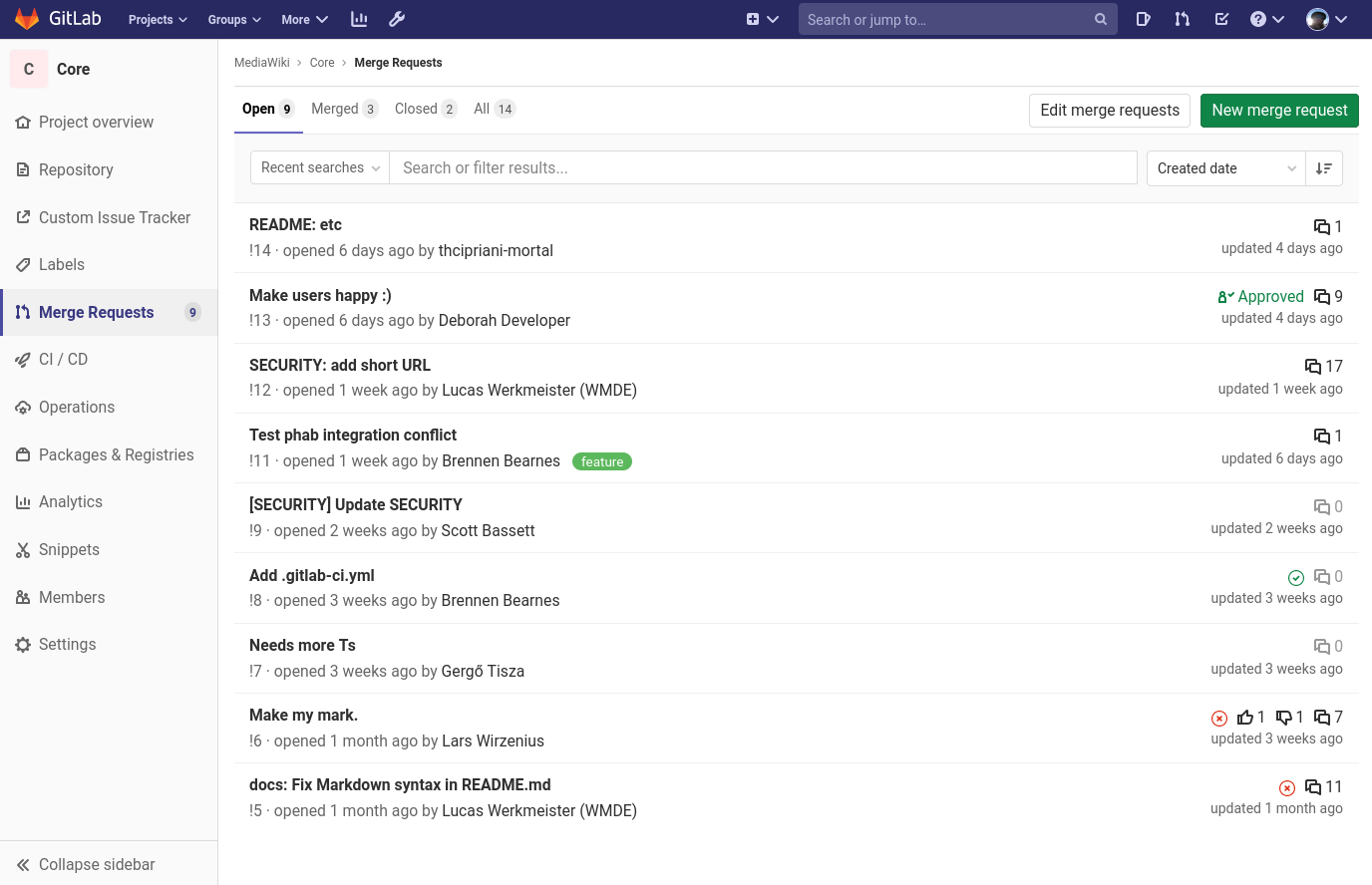
Once the repository exists in the mounted projects directory, open or register that folder in OpenChamber. The exact UI depends on your version, but the principle is the same: OpenChamber should point to the local path, not to a token-filled remote URL.
What to verify after registration
- OpenChamber can list repository files.
- File edits persist on the host after container restart.
- Git status works inside the workspace.
- The AI assistant can inspect the project without reading unrelated host directories.
- Secrets are not visible in committed files.
Branch Management and Safe AI Coding
Do not let an AI coding workflow modify the default branch directly. Treat OpenChamber like any developer environment: create a feature branch, make small changes, test, commit, push, and review through a merge request.
Recommended branch flow
git checkout main
git pull
git checkout -b feature/openchamber-gitlab-setup
# make changes
git status
git add .
git commit -m "Improve OpenChamber GitLab workflow"
git push -u origin feature/openchamber-gitlab-setup
This keeps AI-assisted work reviewable. It gives humans a clean place to inspect diffs, test behavior, and reject unsafe changes.
Running Development Servers from GitLab Projects
After a repository is cloned and registered, OpenChamber can help run local development commands. The important part is controlling how dev servers bind to the network.
Safe dev server practices
- Install dependencies inside the intended project only.
- Prefer local-only binding unless you intentionally expose a service.
- Use separate ports for each project.
- Document startup commands in README or scripts.
- Stop unused servers to save RAM and reduce attack surface.
npm install
npm run dev -- --host 127.0.0.1 --port 3000
Security Checklist for GitLab and OpenChamber
- Use SSH keys or scoped tokens dedicated to OpenChamber.
- Do not store credentials inside project repositories.
- Use Cloudflare Access or another identity layer for the OpenChamber UI.
- Keep project mounts narrow and intentional.
- Review GitLab access when team members change roles.
- Back up repositories and OpenChamber configuration.
- Log and monitor failed authentication attempts.
You may also like OpenScreen Screen Recording: Open-Source Alternative if you are interested in developer tools that prioritize control and transparency.
Common Troubleshooting Issues
Permission denied when cloning with SSH
Check that the correct public key is added to GitLab, the private key has proper permissions, and your SSH config points to the intended key.
chmod 600 ~/.ssh/openchamber_gitlab
ssh -vT [email protected]
Git works on the host but not inside the container
The container may not have access to the same SSH keys, known_hosts file, or mounted project directory. Verify volume mappings and user permissions.
Changes disappear after restarting OpenChamber
The repository is probably stored inside the container filesystem instead of a mounted volume. Move it to the host projects directory and register that path again.
Conclusion
A good OpenChamber GitLab integration keeps GitLab as the source of truth while giving OpenChamber a persistent, secure workspace for AI-assisted development. Use SSH where possible, keep repositories in mounted project directories, create feature branches for AI-assisted changes, and expose development servers only when needed.
With this setup, OpenChamber becomes more than a demo environment. It becomes a practical self-hosted workspace where AI can help with real projects while your team keeps control over code, credentials, and review workflow.
Frequently Asked Questions
Does OpenChamber connect directly to the GitLab API?
Not necessarily. The safest workflow is to authenticate Git access, clone the repository into a mounted workspace, and register that local directory as an OpenChamber project.
Should I use SSH or HTTPS tokens for GitLab?
SSH is usually better for a long-running self-hosted workspace because keys can be scoped, rotated, and used without embedding tokens in clone URLs.
Where should repositories live inside OpenChamber?
Store repositories in a mounted projects directory such as /opt/openchamber/projects on the host. Avoid keeping important code only inside the container filesystem.
How do I keep GitLab credentials secure?
Use scoped deploy keys or personal access tokens, never commit secrets, avoid storing credentials in shared project files, and review access regularly.
Can OpenChamber run development servers from cloned repositories?
Yes. Once a repository is cloned and dependencies are installed, you can run dev servers from the workspace. Expose them carefully and prefer local-only binding.